

Understanding pixel tracking and SERP visibility is no longer optional for marketers and SEO professionals who want to stay ahead. In today’s search landscape, knowing where your pages appear is only half the battle. Knowing exactly how visible they are, and to whom, is what separates top-ranking brands from everyone else competing for the same clicks.
This guide breaks down how pixel rank tracking works, why SERP visibility matters more than ever, and how modern AI-powered tools are changing the game for teams of every size.
What Is Pixel Rank Tracking?
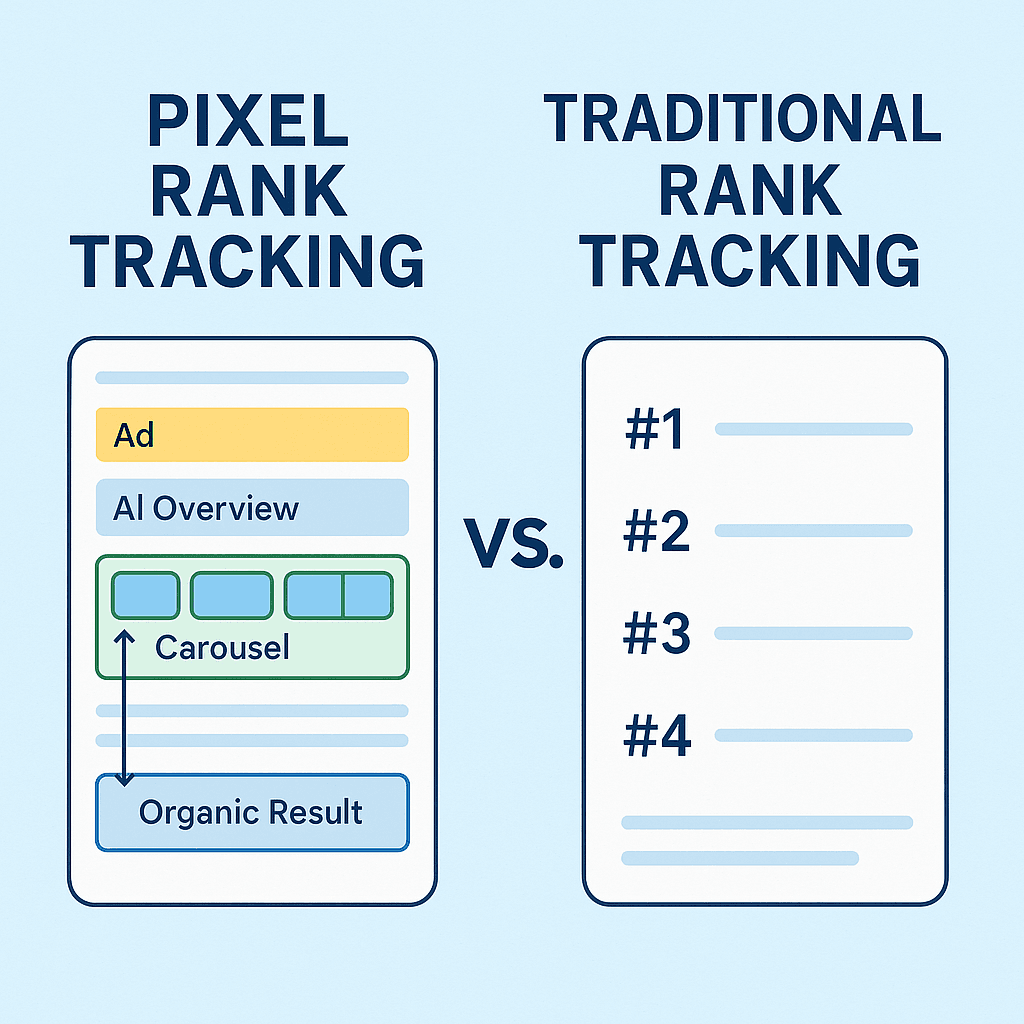
Traditional rank tracking tells you your position. You rank #4 for a keyword. But pixel rank tracking goes a step further: it measures precisely where your listing appears on the screen in pixels, accounting for ads, featured snippets, local packs, and other SERP features that push organic results down the page.
With pixel rank tracking, a rank of #1 in one query may appear above the fold, while a #1 rank in another query sits 900 pixels below it due to a heavy ad block. That difference is enormous for click-through rates, and you cannot see it with standard rank data alone.

How pixel position differs from standard ranking
Standard rank tracking assigns a numeric position (1 to 100) to your URL for a given keyword. Pixel rank tracking assigns a vertical coordinate in addition to that position. This means you can compare two keywords where you rank #3 on both, but one result sits at 400px from the top, and the other sits at 1,200px, which is a massive difference in real-world visibility.
Teams that rely on serp rank tracking visibility data alone often miss this nuance entirely, and continue optimising for position when they should be optimising for screen real estate.
Why pixel depth changes everything
A featured snippet, a shopping carousel, or a local map pack can add hundreds of pixels before the first organic result even appears. Pixel depth data lets you understand whether your content is truly being seen and by how many users before they scroll away.
Why SERP Visibility Is a Critical SEO Metric
SERP visibility is a composite score that reflects how often your domain appears in search results, weighted by ranking position and search volume. A site can have thousands of keywords indexed and still have low visibility if those keywords are low-volume or buried on page three.
As SERP features become increasingly complex, with AI overviews, rich snippets, People Also Ask boxes, and video carousels, the idea of what constitutes “visible” continues to evolve. This is exactly where combining serp pixel measurement with visibility scoring creates a clearer picture than either metric alone.
The relationship between pixel position and CTR
Research consistently shows that click-through rates drop sharply as you move down the page, not just down the rankings. A result at position #2 that appears at 800px deep gets fewer clicks than a position #4 result that appears at 300px because of a minimal SERP layout. This is why pairing pixel rank tracking and SERP visibility data gives you a much more accurate picture of your true organic performance.
Visibility score vs. impressions: what to track
Impressions from Google Search Console tell you how often your site appeared in results. The visibility score tells you how prominently. And pixel depth tells you how accessible that appearance actually was to real users. Together, these three data points form the foundation of modern SERP performance measurement.
AI SERP Visibility Trackers: The Next Evolution
Manual rank checking is dead. Even automated rank tracking is becoming a baseline expectation. The frontier today is AI SERP visibility tracker technology, which refers to platforms that not only record where you rank and how visible you are, but also predict how those metrics will change and recommend actions to improve them.
An AI SERP visibility tracker analyses patterns across thousands of SERPs simultaneously, identifies which SERP features are dominating for your target keywords, and flags opportunities where a small content change could push you above the pixel fold for high-value queries.
What makes an AI tracker different
Traditional tools collect data. AI-powered trackers interpret it. Instead of simply showing you that your visibility dropped by 12%, an AI tracker can surface that the drop is tied to a new featured snippet box appearing for three of your top keywords and suggest structured data changes that might help you capture it.
This level of insight compresses weeks of manual analysis into automated recommendations, making it especially valuable for agencies managing large keyword portfolios across multiple clients.
Key features to look for in an AI visibility platform:
- Integration with GSC, GA4, and third-party keyword tools
- Pixel-level position tracking alongside numeric rank data
- SERP feature detection (snippets, PAA, local packs, video, shopping)
- Automated visibility score calculation weighted by search volume
- Trend forecasting and anomaly alerts
- Competitor visibility benchmarking side by side
Tracking SERP First Page Results: What It Takes to Stay There
Getting to the first page of Google is the goal, but staying there requires constant monitoring. A SERP first page results tracker keeps you informed in real time when your rankings shift, when new competitors enter the top 10, and when algorithm updates disturb the landscape for your core keyword sets.
Setting up effective tracking workflows
The most effective tracking setups separate keywords by intent cluster, including informational, navigational, and transactional, and monitor each group independently. This is because SERP layouts differ significantly between intent types. A transactional keyword may trigger a shopping carousel that consumes 600px before organic results appear, while an informational query may surface a People Also Ask block that actually boosts visibility for position #2 results.
Your serp rank tracking visibility workflows should be configured to flag any keyword dropping off page one within 24 hours, allowing rapid investigation before traffic impact compounds.
Using pixel data to prioritise recovery efforts
Not every ranking drop is equal. If a keyword falls from position #3 to position #5 but your pixel depth barely changes because the SERP layout is clean, the traffic impact may be minimal. But if a keyword falls from #3 to #4 and a new SERP feature pushes your result below the fold, the impact can be dramatic. Pixel rank tracking and SERP visibility data together let you triage recovery efforts by actual business impact, not just positional change.
Building a Complete SERP Visibility Strategy
A well-rounded visibility strategy combines keyword-level monitoring with site-wide visibility scoring, connects rank data to traffic and conversion outcomes, and uses pixel depth to prioritise the content opportunities with the greatest above-the-fold potential.
Step 1 – Establish your baseline visibility score
Pull your current visibility score from your preferred rank tracking platform. Segment by keyword cluster, page type, and geography. This becomes your baseline against which all future optimisation efforts are measured.
Step 2 – Audit your pixel depth for high-priority keywords
For your top 20 to 50 revenue-driving keywords, record the current pixel position of your listing. Note which keywords are being pushed below the fold by SERP features. These represent your highest-priority optimisation targets.
Step 3 – Enable AI-driven alerts and recommendations
Configure your AI SERP visibility tracker to send alerts whenever visibility drops more than a defined threshold in a rolling seven-day window. Layer in competitive intelligence to understand whether drops are site-specific or industry-wide.
Step 4 – Monitor, iterate, and report
Set a monthly reporting cadence that communicates visibility trends, pixel depth changes, and SERP feature wins. Share this with content, technical SEO, and executive stakeholders so everyone is aligned on the same performance indicators.
Conclusion
Pixel tracking and SERP visibility represent a more sophisticated and honest way to measure your search presence. Position numbers alone no longer tell the full story. By combining pixel rank tracking with AI-powered visibility scoring and a robust SERP first page results tracker, you gain the complete picture. Not just where you rank, but whether real users can actually see you.
As AI overviews and rich SERP features continue to reshape the search landscape, the teams that invest in deeper visibility intelligence now will be best positioned to adapt, respond quickly, and protect their organic traffic for the long term.
The tools exist. The data is available. The question is whether your strategy is sophisticated enough to use it.